If you live in Tucson, you already know the struggle: keeping a natural grass lawn green through 100-degree summers, monsoon dust storms, and relentless sun is a losing battle. More homeowners in Marana, Oro Valley, and Catalina Foothills are asking the same question — is artificial turf finally the better choice for desert living? This guide breaks down the real numbers on water, maintenance, heat, and cost so you can decide with confidence.
Water Use: The Desert's Biggest Factor
A typical natural grass lawn in Southern Arizona needs roughly 50–70 inches of supplemental water per year to stay green. For a 1,000-square-foot yard, that can mean tens of thousands of gallons annually — and a water bill that climbs every summer. Artificial turf requires zero irrigation for the lawn itself, which is why so many Tucson homeowners switch during drought restrictions. The savings show up fast, especially in neighborhoods like Dove Mountain and Rancho Vistoso where HOAs still expect a lush look.
Maintenance: Mowing vs. Almost Nothing
Natural grass demands weekly mowing, edging, fertilizing, aerating, and pest control. In Tucson's heat, Bermuda and overseeded rye still brown out no matter how much you baby them. High-quality artificial turf needs an occasional rinse, a brush to stand the blades back up, and pet-waste cleanup if you have dogs. That's it.
- Natural grass: 20+ hours of maintenance per month in peak season
- Artificial turf: 1–2 hours per month, mostly rinsing and brushing
- No fertilizer, no weed killer, no gas-powered equipment needed
Heat Tolerance: Will Turf Melt in the Sun?
This is the #1 concern we hear. Older turf got dangerously hot. Today's UV-stabilized, desert-rated turf uses blades engineered to reflect heat and resist fading. Surface temperatures can still climb on a 110-degree afternoon, so we recommend a quick hose-down before barefoot use and shade from trees or pergolas where possible. The right infill — not cheap rubber — also keeps things cooler and drains monsoon rain in minutes.
Cost Comparison Over 5 Years
Artificial turf has a higher upfront cost (base prep, premium turf, professional installation), but natural grass keeps charging you every single month. Here's a realistic 5-year picture for an average 800 sq ft Tucson yard:
- Natural grass: ~$3,000 install + ~$150/month water/maintenance = $12,000+ over 5 years
- Artificial turf: ~$6,000–$9,000 installed, near-zero ongoing cost
- Break-even typically hits around year 4–5, then turf saves every year after
Which Should You Choose?
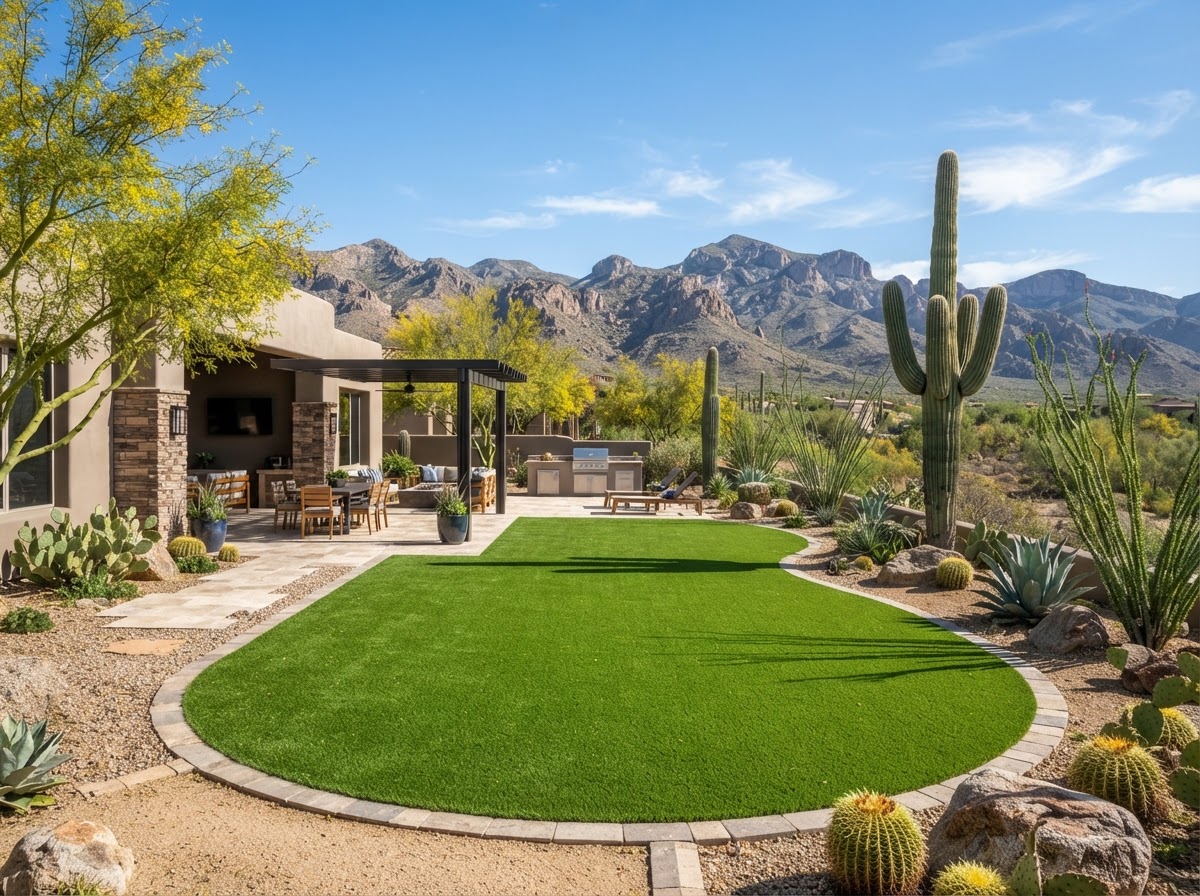
If you value a consistently green, low-maintenance yard and want to cut water use dramatically, artificial turf wins in Tucson. If you love the feel of real grass and don't mind the upkeep and water bill, a small natural patch paired with desert landscaping can work. Most of our clients end up with a hybrid: turf in high-use areas and native plants around the edges.
We replaced 1,200 sq ft of dead Bermuda with turf and our water bill dropped by more than half. Six months later it still looks brand new despite the heat. — Priya A., Marana, AZ
Ready to see what turf would look like in your yard? Dreamland Hardscapes offers free in-home consultations and 3D design renderings across Greater Tucson. Get your free estimate today.
Ready to build your dream backyard?
Get a free, no-obligation estimate with a 3D design concept — response within 24 hours, guaranteed.
Get Your Free Estimate